Read the whole code before you shop
You can recognize your tire size and still order the wrong replacement. The useful habit is to record the complete marking, compare it with your vehicle's requirements, and ask about anything that does not match before the tire reaches a wheel.
Start with the tire information placard and your owner's manual, then photograph the tires already installed. That gives you both the vehicle's intended specification and a record of what someone actually fitted, which are not necessarily the same thing on a used car.
Michelin explains that sidewall markings describe dimensions, construction, load capacity, and speed capability. Treat those as separate pieces of information rather than assuming that matching the biggest numbers settles the purchase.
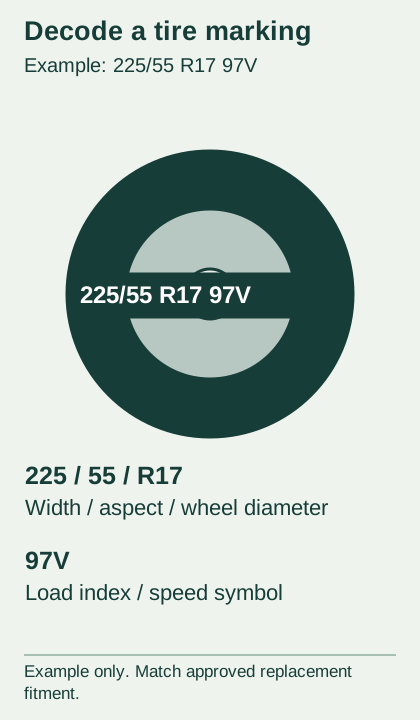
For this walkthrough, imagine a sidewall marked 225/55 R17 97V. Those numbers are an educational example, not a recommended fitment for your car, and you should not use them to choose a tire without checking your own vehicle.
Separate width, height, and wheel diameter
In that example, 225 describes nominal section width in millimeters. It is not the width of the tread you can measure across the top with a ruler, so a casual driveway measurement will not reliably confirm fitment.
The 55 is an aspect ratio: the nominal sidewall height is 55 percent of the section width. It is a proportion rather than a height in millimeters, which explains why a 55-series tire can have a different sidewall height when its width changes.
The R identifies radial construction, while 17 identifies the wheel diameter in inches. The code mixes different kinds of information and units, so reading it as one long measurement is where shopping mistakes often begin.
Imagine that you search for a less expensive 225/55 tire and overlook the final wheel number. A listing for a different wheel diameter cannot become a suitable replacement simply because its width and aspect ratio look familiar.
You do not need to calculate dimensions to place a normal replacement order. You need to copy the complete approved size accurately and keep any proposed alternative in a separate conversation with a qualified tire professional.
Give the service description its own line
The 97V following the size is the service description. The number is a load index, and the letter is a speed rating, so neither should disappear when you shorten the specification in a text message to a shop.
A load index is a code tied to carrying capacity under defined conditions, not the weight of your whole vehicle. A speed rating describes capability under specified conditions and does not authorize you to exceed speed limits or ignore weather, damage, or road conditions.
Michelin says replacement load and speed ratings must meet or exceed the vehicle manufacturer's specifications. If you are considering a special application such as winter tires, ask for the manufacturer's documented guidance rather than treating an online comment as an exception.
Write the size and service description on separate lines in your shopping note. That small formatting choice makes it harder for a quote to match the dimensions while quietly substituting a different rating.
If a seller says that a lower rating is close enough, pause the order and request the exact basis for that recommendation. You should be able to connect the answer to your vehicle, your use, and an identified specification rather than a vague assurance.
Check whether the front and rear actually match
Walk around the parked car and record all four positions individually. You may find a staggered factory setup, a previous replacement that differs from the others, or markings you cannot read from your first photograph.
Do not assume that the number on the driver's front tire describes the rear axle too. Ask the shop to confirm the front and rear requirements for your exact vehicle configuration, especially if the wheels have been changed.
A used-car listing may identify only the model name while leaving out an important wheel package. Your VIN and the installed wheel information help the shop investigate, but a database result still needs to agree with the actual vehicle and manufacturer requirements.
Keep the temporary spare out of this comparison. Its markings and restrictions belong to its emergency role, so copying the spare's size onto an order for ordinary road tires would answer the wrong question.
Your note can simply say left front, right front, left rear, and right rear, followed by each full marking. You are building a clear record, not trying to certify the suitability of every existing tire yourself.
Keep pressure, age, and model names separate
The sidewall contains more than size information, and not every prominent number belongs in the fitment field. Maximum pressure, a DOT identification sequence, and the tire line name serve different purposes.
Michelin distinguishes the sidewall maximum pressure from the vehicle's recommended operating pressure. Use your vehicle's placard or manual for the inflation target instead of inflating to a number you spotted while reading the size.
The tire's brand and line identify the actual product family. Two tires with the same dimensions and ratings can still be different products, so a useful quote should identify the complete model rather than only a familiar brand.
Similarly, a manufacturing date is not another size suffix. Record it elsewhere if you are checking age, but do not let a date-code discussion distract from confirming the complete replacement specification.
When you send photographs, include one wider view showing the wheel position and one readable view of the markings. That makes it easier for the recipient to tell which tire you mean without asking you to repeat the inspection.
Make an online listing answer your actual question
An online fitment tool is a starting point for a purchase conversation. It is less useful when you enter the wrong trim, forget aftermarket wheels, or accept a default wheel size without noticing it.
Before checkout, compare the listing's full size, load index, speed rating, exact tire line, and intended position against your written requirements. If one field is absent, ask for it instead of assuming that the picture or search filter supplied the answer.
Photographs on retail listings may show a representative size. Read the selected variant and the order summary, because a photo of the correct brand does not tell you which size will arrive at your door.
If you are choosing installation through a separate shop, confirm that shop's willingness to install the exact proposed tire before ordering. You avoid turning a fitment disagreement into a stack of tires you now need to ship back.
Keep any alternative size proposal separate from a like-for-like quote. That lets you compare price honestly without losing track of which option still needs a professional compatibility assessment.

Ask for a complete written quote
Tell the shop how you use the vehicle, including towing or unusual loads, without inventing a load rating yourself. Ask it to confirm the tire specification and explain any difference from the vehicle's documented requirements.
Request an itemized quote that names the exact tire line and complete service description. You can then compare actual candidates instead of comparing one detailed offer with another offer that merely says four all-season tires.
On installation day, review the paperwork before the work begins and check the fitted markings afterward while the car is safely parked. If the product differs from the agreed quote, raise it immediately rather than planning to remember the discrepancy later.
Save the invoice with your vehicle records and keep your original photographs until the order is settled. The goal is a traceable choice: vehicle requirement, agreed product, installed tire, and a clear explanation for any deliberate change.
Before you close the order page, read your specification aloud against the written quote one final time. A short pause catches a transposed number more easily than a return shipment fixes it after installation day arrives.
Sources & scope
Checked October 15, 2026. Manufacturer examples apply to the named model and document. Reader scenarios and organization are original editorial explanations.
- Michelin: Tire Markings Explained — Width/aspect ratio/construction/wheel diameter; brand/line and pressure markings.
- Michelin: Choosing the Right Tire Size — Find approved size through vehicle placard/manual; size and equipment verification.
- Michelin: Changing Tire Sizes — Load/speed meanings and replacement rating requirements; no chart values reproduced.